
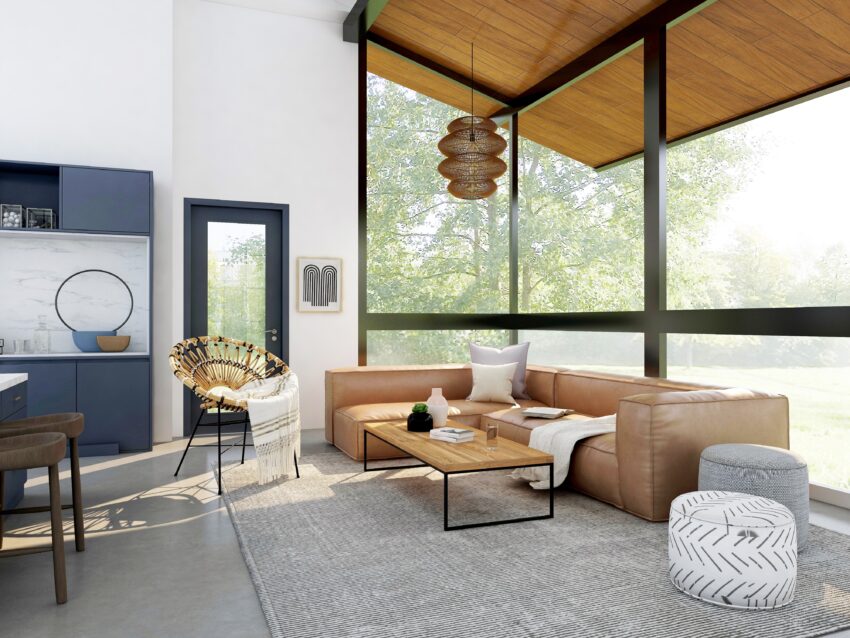
Furnishing your lounge with taste and coherence means paying attention to every detail, starting with the fundamental duo of any living space: sofa and armchair. It may seem secondary, but the way you match sofa and armchair greatly influences the overall aesthetics and usability of the space. It is not only a matter of aesthetics: we are talking about functionality and personality.
In the lines that follow, we will explore how to match sofa and armchair harmoniously, touching on topics such as how to combine sofa with different armchairs, how to arrange sofas and armchairs within an already furnished or developing lounge, and how to coordinate various styles and materials to enhance the entire living area. We will also delve into the role of armchairs with sofas in different types of environment, providing practical examples and real-life cases, to better understand where and how to dare and where to stay on more traditional tracks.
If your goal is to give visual coherence and harmony to the living room—or you wish to renew the décor by taking advantage of pre-owned designer furniture on Deesup—this guide will accompany you step by step, avoiding confusion and risky choices. Sometimes just a bit more awareness is enough to find the perfect balance.
INDEX
- Why Matching Sofa and Armchair Deserves Attention
- Armchairs with Sofa: A Strategic Pair for Comfort
- Sofa and armchair: differences and roles in the living room
- How to Match Different Sofas and Armchairs: Contrast and Harmony
- Styles and Materials: Coordinated or Mixed?
- Leather or fabric? Choosing the right sofa before you start matching
- How to Arrange Sofas and Armchairs: Functional and Creative Solutions
- Matching sofa and armchair when materials are different
- How to arrange chairs and seating in the living room
- Colours and Patterns: Dare or Stay Subtle
- Practical ideas: a beige sofa and the right armchair
- Real Examples of Advantageous Pairings
- Budget, conscious buying and second-hand checks
- Common Mistakes to Avoid and Final Tips
- Conclusions: Harmony Between Sofa and Armchair in Your Home
1. Why Matching Sofa and Armchair Deserves Attention
Anyone who has designed or redesigned their living room knows that finding the ideal furniture is not always simple. In common imagination, the sofa is the cornerstone of the living area: here we relax, read a book, chat with guests, watch TV. Often, however, the importance of how to pair complementary elements, particularly the armchair, is overlooked.
Many times I meet clients who focus solely on the sofa and only later realise they need one or more armchairs to complete the conversation area or increase seating. At this point crucial questions arise: “Can I place an armchair of a different style next to it? Is it better to buy a coordinated set? Which materials go well with my current sofa?”
These questions are more than legitimate because the armchair, unlike stools or poufs, occupies significant visual space and contributes to the room’s overall balance. The way it integrates with the sofa influences the living room’s atmosphere and functionality. That is why it deserves all your attention.
2. Armchairs with Sofa: A Strategic Pair for Comfort
Armchairs with a sofa are, to all intents and purposes, a strategic pair. Imagine a medium-sized lounge where the sofa offers three seats, but your family often numbers four or five, or you regularly host friends. One armchair—or better, two—can solve the seating issue without adding a second sofa, which is bulkier and more expensive. The advantage is being able to place individual, easily movable elements, creating a flexible configuration that adapts to conversations, movie nights, solitary reading or convivial gatherings.
From an aesthetic perspective, the armchair enriches the living room with its personality. A neutral-fabric sofa, for example, can be livened up by a brightly coloured armchair or one with a more “rock” leather upholstery. Conversely, if the sofa already sports a strong colour, the armchair can appear more sober, balancing the ensemble. When I recommend an armchair to a client, I often suggest evaluating comfort in person: an armchair that is too rigid or too small can prove less usable than expected. Other factors to consider are backrest height, armrests and the possibility of swivelling the seat if you want a rotating model to orient toward a study area or the TV.
If you have a passion for design, Deesup makes it easy to find vintage armchairs by great masters or pieces from contemporary high-end brands at significantly better prices than new. These armchairs can become protagonists, especially if your sofa is more neutral and you desire a touch of exclusivity.
3. Sofa and armchair: differences and roles in the living room
Before talking about matching, it helps to clarify what sets these two pieces apart. The sofa is usually the “architectural” element of the lounge: it defines the main axis of the room, offers shared seating and often dictates the scale of the whole composition (rug size, coffee table proportions, TV distance). The armchair, instead, is a more personal seat: it creates a dedicated spot for reading, a one-to-one conversation corner, or a flexible extra place that can be moved when guests arrive.
From an ergonomic point of view, armchairs tend to have a more enveloping shape (or, in design icons, a very specific posture), while sofas prioritise continuity of seating. In practice, this means that choosing an armchair is less about “copying” the sofa and more about adding a complementary experience: upright for conversation, deeper for lounging, with or without armrests depending on how you use the room.
When you evaluate the armchair vs sofa choice, focus on three criteria that immediately impact harmony: scale (seat height and backrest height should not clash), visual weight (a bulky armchair next to a light-legged sofa can feel unbalanced) and function (TV watching, reading, hosting). Once these are clear, style and colour become much easier to manage.
4. How to Match Different Sofas and Armchairs: Contrast and Harmony
Daring with Different Styles
If you wish to match different sofas and armchairs, you can opt for contrasting styles: a minimalist sofa and a vintage armchair, or a dark leather sofa with a light-velvet armchair, or even a classic Chesterfield sofa paired with a modern armchair with geometric lines. The common thread in these cases is not stylistic identity but the harmonious dialogue between elements. To create a pleasant contrast, you can rely on a shared element (colour palette, a wood detail, fabric type) and let everything else be freely interpreted.
Where is the risk? Well, if you overdo casual combinations you might get a messy or confusing effect. An eclectic interior, where each piece tells a different story, can be fascinating if well orchestrated, but may also generate visual chaos. Finding at least one common thread is always a good idea, whether it is a colour echo in the cushions or a coherent style for side tables.
Combining Different Materials
Often, to “refresh” a slightly dated sofa or an armchair bought at another time, a strategic mix of materials is enough. A simple-fabric sofa can be enriched by a leather armchair, perhaps with a particular texture, creating a tactile and visual contrast. When your lounge features warm-tone parquet, a brown leather or hide armchair adds a touch of elegance and pairs beautifully with a cream or taupe fabric sofa. For a more glamorous effect, consider a dark velvet sofa combined with a light brocade armchair accented by brass finishes, evoking a modern take on Art Décoratif style.
To achieve a more harmonious pairing, opt for identical upholstery materials (such as cotton fabric) but vary the shades. Choosing an armchair one or two tones lighter or darker than the sofa keeps overall harmony while introducing a subtle chromatic contrast.
5. Styles and Materials: Coordinated or Mixed?
Style often confuses those trying to understand how to match different sofas and armchairs. In my long experience, I have seen impressive results both when aiming for uniformity and when playing with diversity. The only discriminating element is your personal taste and coherence with the rest of the décor. If you like a linear living room where everything follows a clear common thread, you may appreciate pairing sofa and armchair from the same collection, with matching materials and lines. You will get an orderly, “risk-free” result.
If instead you prefer a more dynamic, creative environment, mixing styles and periods is an excellent solution. Some concrete examples: a Scandinavian-style sofa with high legs and light-coloured fabric, next to a 1950s retro armchair, perhaps with a wooden frame and vintage fabric. Or a classic tufted sofa and a more contemporary armchair in microfiber or eco-leather with square lines. In this way, the lounge becomes almost a story where each piece has a soul that integrates but does not fully conform.
Regarding materials, functional aspects are worth evaluating: if there are pets or children in the house, delicate fabrics on both sofa and armchair may wear quickly, whereas leather or stain-resistant fabric would prove more practical. To maintain balance, choose different but similarly robust upholstery so that you don’t perceive an excessive leap between the two seats.
5. Leather or fabric? Choosing the right sofa before you start matching
Matching sofa and armchair works best when the main piece already fits your everyday life. The classic dilemma—leather sofa vs fabric sofa—isn’t just about style: it touches cleaning routines, durability and how the seat feels in different seasons. Below you’ll find a practical comparison (closer to real life than to a showroom), so you can decide with awareness and then choose the armchair accordingly.
Daily cleaning and maintenance
For day-to-day care, leather is often quicker: a soft cloth and gentle products are usually enough, and spills can be removed before they soak in. That said, leather sofa maintenance is not “zero effort”: good leather benefits from periodic nourishment/conditioning and from being kept away from direct heat sources that dry it out.
Fabric is welcoming and forgiving visually, but it needs more routine: regular vacuuming (especially along seams) and prompt spot cleaning reduce the risk of permanent marks. If you’re comparing options because you dread stains, check whether the upholstery has removable covers or is treated with stain-resistant finishes: it changes the experience more than the colour does. When it comes to fabric sofa cleaning, the safest approach is always to follow the manufacturer’s codes and test products on a hidden area first.
Durability, wear and the look over time
Wear is different, not necessarily better or worse. Leather can scratch, especially with sharp objects or pet claws; over time it may develop a patina that many people love (it adds depth and character). Some finishes, however, show abrasions more than others. Fabric can suffer from pilling (small surface fuzz balls), snagging and, depending on fibre and exposure, fading in bright rooms. If you need a truly durable sofa material, look beyond “leather vs fabric couch” and ask about the specific upholstery grade: tight weaves, quality microfibres and performance textiles can be extremely resilient.
A useful rule of thumb: in a living room that is used intensively every day, choose a material that looks good even when it shows some life. A slightly lived-in leather can be charming; a fabric that pills or gets shiny in the most-used areas can be harder to love.
Comfort, temperature and touch
Comfort is not only about softness; it’s also about how a seat behaves with your home’s climate. Leather can feel cool to the touch in winter and warmer in summer, especially if the room is humid. Some people also notice a slightly “sticky” sensation on bare skin in hot months. Fabric tends to feel more breathable and immediately cosy, which is why it’s often preferred in relaxed, everyday lounges.
If you love leather but worry about seasonal comfort, consider a throw or a breathable cover in summer, and pay attention to placement: away from direct sun and radiators, both for comfort and for preserving the upholstery.
Allergies, dust and hygiene
For many households, the decision also involves hygiene. Leather doesn’t trap dust in the same way and is easier to wipe thoroughly, which can be helpful if you’re looking for a sofa for allergies. A well-kept leather seat is often perceived as a more hypoallergenic option because allergens are less likely to lodge into fibres—although what really matters is consistent cleaning and ventilation.
Fabric, on the other hand, can retain dust and odours more easily, especially in textured or plush weaves. That doesn’t make it “bad”: it simply means that a home with allergies benefits from removable covers, frequent vacuuming and, when needed, professional deep cleaning.
Kids and pets: stains, hair and scratches
If you share the lounge with children or animals, think in terms of “what will I forgive?”. Leather resists many spills, but it can show scratches; fabric is less prone to visible scratching, but can hold onto hair and be more demanding with stains. For a sofa for pets, many people find tight-weave fabrics and quality microfibre a pragmatic solution: they are easy to vacuum and often more resistant to snagging than looser textiles.
With leather, finishes matter: pigmented/protected leathers are usually more practical than very natural, delicate aniline leathers. If your priority is easy living, choose materials that align with how the room is actually used, not only with how it looks on day one.
Costs and long-term value
Upfront price ranges can vary widely for both materials, but the real comparison is the cost of ownership: maintenance, repairs and how long the sofa stays attractive. A high-quality leather sofa can be a long-term investment (and can sometimes be restored), while a lower-quality leather-look surface may crack and age poorly. Fabric sofas can be excellent value, especially with replaceable covers, but may require more frequent deep cleaning.
If you’re unsure, a good strategy is to allocate budget where it’s felt most: choose the best upholstery you can afford for the main seat you use daily, then match the armchair by playing with texture, colour and silhouette.
6. How to Arrange Sofas and Armchairs: Functional and Creative Solutions
Beyond stylistic pairing lies the practical aspect of arranging sofas and armchairs in your lounge. The good news is there is no fixed rule, but certain guidelines can help you achieve comfortable, coherent results.
If you imagine a classic living room with a three-seater sofa, the armchair can be placed at the side, perhaps forming a 90-degree angle around a coffee table. Thus the conversation area feels cosy and whoever sits in the armchair can easily converse with those on the sofa. If space allows, inserting two symmetrical armchairs opposite the sofa (if it is against the wall) is a very elegant layout, used even in more formal settings.
In an open-plan space, the sofa can be positioned “floating” in the centre of the room, visually separating the living area from the kitchen. In this scenario, an armchair can stand opposite, forming a small, intimate seating area, or laterally to leave a clear view toward a wide window or passage. When dimensions permit, I like to envision a main sofa, one or two armchairs and sometimes a chaise longue to vary relaxation spots. However, it is vital not to clutter footpaths, so as not to impede movement.
Lighting also plays a role: if the armchair is a reading point, place it near a window or provide an adequate floor lamp. If the aim is to watch TV from both sofa and armchair, both seats should have an optimal view. Pay attention to radiators or air-conditioners too: placing an armchair directly in front of a heat source may cause discomfort and hinder proper air diffusion.
6. Matching sofa and armchair when materials are different
Mixing upholstery is one of the simplest ways to make a living room feel curated rather than “catalogue-perfect”. The key is to balance texture, colour temperature and visual weight so the combination feels intentional.
Leather + fabric: how to balance textures and colours
A leather sofa paired with a fabric armchair (or the opposite) works best when you create at least one bridge between the two pieces. It can be a shared undertone (warm vs cool), a repeated material detail (wood legs, metal finish), or a small colour echo in cushions and throws. For instance, a cognac leather seat can look refined next to a bouclé or linen-blend armchair in warm off-white; a charcoal fabric sofa can gain depth with a black or dark-brown leather armchair, softened by a rug with mixed fibres.
When you mix materials, avoid pairing two surfaces that both demand attention in the same way (for example, very glossy leather + very shiny velvet) unless the rest of the room is deliberately minimal. If you want a safe and elegant result, let one piece be the “statement” and keep the other quieter.
How to manage mismatched armchairs without losing coherence
Two different armchairs can look sophisticated—think of it as a small curated collection—provided you control the variables. Choose one constant (colour family, leg finish, or overall style) and vary the rest. If the armchairs are visually very different, keep them within the same “mass”: similar seat height and comparable volume prevent the room from feeling lopsided.
A practical trick is to use the rug as a unifying field: when the armchairs sit on the same rug plane, the composition reads as one conversation area even if the seats are not identical. This approach is especially effective in eclectic interiors, where repetition of a single detail can create rhythm without forcing uniformity.
7. How to arrange chairs and seating in the living room: simple rules that work
Even the best matching can fall flat if the layout is awkward. When you’re deciding how to arrange chairs in the living room, think of the space as a small choreography: sightlines, distances and easy movement matter as much as style.
Distances between seating, coffee table and walls
- Leave breathing room: try to keep about 60–90 cm for main walkways, so the lounge doesn’t feel cramped.
- Coffee table reach: place the table close enough to be useful but not intrusive—roughly an arm’s reach from the sofa edge is a comfortable benchmark.
- Rug as a guide: if you use a rug, let at least the front legs of sofa and armchairs sit on it; it visually anchors the seating group.
- Orient toward a focus: TV, fireplace, a view, or simply the centre of the conversation area. If the armchair is mainly for reading, prioritise a good light point over perfect symmetry.
Also consider doors and windows: an armchair that looks perfect on paper can become annoying if it blocks access to a balcony or forces a tight passage behind it.
Two armchairs instead of a sofa: when it’s the better choice
In some rooms, two armchairs instead of a sofa is not a compromise—it’s a smart design move. It works particularly well in small lounges where a standard sofa would dominate, in rooms used mainly for conversation, or in spaces where you want maximum flexibility (moving seats for gatherings, opening up the centre for yoga or playtime).
Pros: you gain visual lightness, easier cleaning around the furniture, and a more intimate dialogue. Cons: you lose the “lying down” comfort of a longer seat and sometimes reduce total capacity if guests are frequent. A good middle ground is a compact two-seater with one statement armchair, or a pair of armchairs plus a pouf that can become an occasional seat.
8. Colours and Patterns: Dare or Stay Subtle?
Colour, as partly covered, is another decisive variable when talking about matching sofa and armchair. Some prefer a monochromatic lounge, choosing sofa and armchairs in the same colour (perhaps with different shades), while others enjoy mixing bold hues and striking patterns. In truth, both approaches can yield notable results, provided a few common-sense rules are respected.
If the sofa is already very colourful—say a scarlet-red or petrol-green sofa—and acts as the room’s standout piece, you might pair a neutral-tone armchair, such as grey, beige or cream, to avoid visual conflicts. The sofa remains protagonist; the armchair coordinates discreetly, and the ensemble feels harmonious. If you prefer a bolder approach and have a sofa in soft colours (think light grey), you can introduce an armchair in a complementary colour or a geometric, floral or abstract pattern. This counterpoint will add vitality and personality to the lounge, drawing attention and inviting people to sit in that “special” armchair.
For lovers of classic styles, striped or checked patterns on armchairs easily fit next to a plain sofa. If your living room is inspired by shabby-chic or Provençal style, you can choose fabrics with delicate floral motifs, creating a romantic effect. In an industrial context, why not dare with a jeans-fabric armchair or one with leather inserts and studs? The key is always to maintain balance, without overdoing too many different patterns that could cause confusion.
8. Practical ideas: a beige sofa and the right armchair
Beige is one of the most versatile bases you can choose, but it’s also where many living rooms risk looking “flat”. If you’re searching for beige sofa living room ideas, the trick is to add depth through materials and controlled contrast rather than through random accents.
- Warm and natural: pair a beige fabric sofa with a cognac leather armchair, walnut or oak details, and a rug in sand and terracotta tones. The result feels welcoming and timeless.
- Soft contemporary: choose an armchair in bouclé, oatmeal or stone-grey, with black metal legs. Add a coffee table in glass or light marble to keep the palette airy.
- Graphic but elegant: keep the sofa neutral and introduce one patterned armchair (small-scale geometry or subtle stripes) picking up one colour already present in the room—artwork, curtains or cushions. One statement is enough.
If you want the lounge to look designed rather than decorated, limit yourself to two or three main tones plus one accent, and repeat them in small elements. This approach also works with broader living room sofa ideas: start from the sofa’s undertone (warm beige vs cool beige) and choose the armchair within the same temperature range.
7. Real Examples of Advantageous Pairings
A Modern, Minimal Living Room
In a 70 m² city apartment, the owner wanted a minimal, contemporary lounge dominated by white and grey. He had bought a charcoal-grey, very square sofa. To complete seating we suggested adding a white leather armchair with a more sinuous shape and a chromed metal swivel base. Initially it seemed risky, but the contrast between the pure-white armchair and dark sofa created refined balance, further enhanced by a transparent glass coffee table and a floor lamp with steel finish. The result was a modern, bright space free of monotony.
Pairing in an Eclectic Style
A young couple had inherited a 1960s vintage sofa upholstered in powder-pink velvet with tapered dark-wood legs. Instead of discarding this piece, we suggested enhancing it by adding two more modern small armchairs with black-lacquered metal frames and cushions in geometric fabric. The armchairs’ main colours picked up black and gold, creating an agreeable contrast with the pastel velvet sofa. The eclecticism was reinforced by an Oriental rug and some ethnic objects, giving the lounge a cosmopolitan soul rich in cues. Despite the mix of eras and materials, the final effect was coherent because each element found an echo in the others.
Armchair as Focal Point
In a more traditional context, a middle-aged gentleman wished to refresh the lounge without changing his beloved classic brown-leather sofa. We added a single Chesterfield-style armchair, also in leather but a lighter caramel brown, with stitching recalling the sofa yet differing in tone. This armchair became a focal point, placed near a wall-to-wall bookcase and a small magazine table. Though similar in style to the sofa, the slight colour difference broke monotony, creating a pleasant visual hierarchy. Now, visitors find two coordinated yet non-identical seating zones, enriched by a large Persian rug and warm lighting.
10. Budget, conscious buying and what to check in second-hand pieces
A well-matched set does not necessarily require buying new. In fact, pre-owned design can be an excellent way to access higher quality materials—especially when you care about upholstery durability and construction.
- Check the structure: frame stability, joints, and any creaks. A beautiful upholstery won’t compensate for a weak structure.
- Inspect upholstery honestly: on leather, look for deep scratches, dryness and colour loss on high-contact areas; on fabric, look for pilling, pulled threads and uneven fading. These are normal signs of use, but they should align with the price.
- Ask about maintenance history: a leather seat that has been periodically conditioned often ages better; removable covers are a plus for fabric.
- Measure everything: not only width, but also depth and backrest height. Many “matching” problems come from proportions rather than from style.
- Plan the refresh: professional cleaning or minor restoration can be part of the budget—often still advantageous compared to buying lower quality new.
If you’re building a coherent lounge step by step, choose the main seat first (the sofa for daily use), then add an armchair that complements it in comfort and visual weight. This is one of the most reliable ways to make matching sofa and chairs feel natural, even when pieces come from different times and brands.
8. Common Mistakes to Avoid and Final Tips
After describing guidelines and suggestions for matching sofa and armchair, it is worth mentioning common mistakes that arise if one does not reflect carefully:
- Choosing an armchair (or several) too bulky for the lounge or sofa size. If space is already limited, opt for more agile models, perhaps with high legs, avoiding overly large backs and armrests. Sometimes it is better to forgo armchairs and invest more in the sofa.
- Ignoring comfort. A big mistake is favouring a gorgeous “designer” armchair that is uncomfortable. Furniture must be lived in, not only admired. Always test the seat. In some cases, though, I would choose an armchair for its particular shape as a stylistic statement giving character to the whole environment.
- Matching colours or patterns without minimum criteria, generating a “patchy” effect. A bit of creativity is fine, but it is important to have an overall vision.
- Placing armchair and sofa so that they block passages or hinder other areas’ use. Often, to insert an armchair, people forget to leave space around doors, windows and storage units. Functionality must remain central.
- Overlooking proportions when mixing pieces from different brands or eras: backrest height, seat depth and armrest thickness can make the pairing feel “accidental”. When in doubt, keep one element consistent (for example, similar leg height) and let the other vary.
For final advice, I suggest building a small, even digital, moodboard with photos of the models you like, colour palettes, fabric textures and finishes. By visually comparing everything, you will immediately see if the armchairs match your sofa. Remember also to measure the room and existing furniture carefully to avoid unpleasant surprises when purchasing.
If you already have a sofa and are looking for the perfect armchair—or vice versa—take a look at Deesup, where you may discover unique pre-owned design pieces of high visual impact and quality without necessarily spending exorbitant amounts. The opportunity to combine a classic-brand sofa with a more modern armchair (or the reverse) can become a distinctive feature of your lounge, making it truly original.
9. Conclusions: Harmony Between Sofa and Armchair in Your Home
Matching sofa and armchair is not merely an aesthetic exercise but a way to improve quality of life at home. Through the seating you choose, you tell something about yourself, your habits, your sensitivity to design and how you use spaces. You can create a calm, coordinated environment where every element is planned for comfort, or experiment with bolder solutions that highlight chromatic and stylistic contrasts.
When defining how to match and arrange sofas and armchairs, always strive to maintain overall balance by considering room size, natural light, desired functions, and the presence of other furnishings. Spacious living rooms allow for multiple armchairs and the creation of distinct zones—perhaps one for reading and another for conversation. A single well-chosen armchair can make all the difference in smaller settings, adding a personal touch without sacrificing practicality.
Remember that in an increasingly creative design world, mixing and personalising is not only possible but advisable. The essential thing is to keep a basic design coherence, oriented by a chromatic or stylistic thread, so the eye moves pleasantly among the various elements.
I hope this guide has provided useful, concrete inspiration: now it is up to you to unleash your creativity and transform your lounge into a unique place that truly speaks of you and your way of living at home. Happy matching!